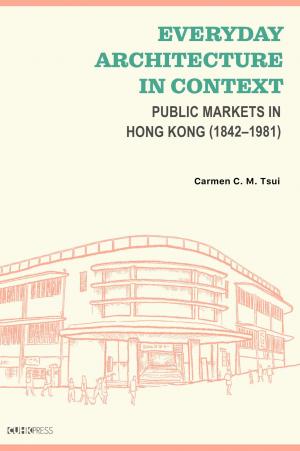
Everyday Architecture in Context:Public Markets in Hong Kong(1842–1981)
書籍資訊
作
者:
出版社:
類
別:
人文藝術
格
式:
PDF
上架日:
內容簡介
How do public markets, as ordinary as they seem, carry the weight of a city’s history? How do such everyday buildings reflect a city’s changing political, social, economic needs, through their yearslong transformations in forms, functions, management? Integrating architecture history, this book invites readers to go through the growth governance of colonial Hong Kong by tracing the past present of public markets as a study of extensive firsthhistorical materials. As the readers witness the changes in Hong Kong markets from hawker pitches to classical market halls to clean modernist municipal complexes, the book offers a new perspective of understanding the familiar everyday markets with historical contexts possibly unfamiliar to most, studying markets as a microcosm of the city a capsule of its history.
This book is a robust in-depth study of the market building history of Hong Kong since the 1840s contributes to a holistic understanding of everyday urbanism, public space, the birth of modern architecture in this city. ProfessCarmen Tsui has broken new ground in positioning market buildings as sites fsituating architecture at the centre of the social economic history of Hong Kong.
—ProfessHo Puay Peng
UNESCO Chair on Architectural Heritage Conservation Management in Asia
Head of Department of Architecture, School of Design
Environment, National University of Singapore
As chaotic as they may seem, Hong Kong’s public markets have their own business spatial logic are important venues fpeople to understthe city. To improve hygiene, food peddlers have been removed from the streets to indomarkets. Some of the vigorous marketing activities cannot be sustained indoors, while others take other forms to survive. This book reconstructs the past present of public markets in Hong Kong. It provides important documentation analysis of the city’s most vibrant architecture.
Public markets connect people they witness the joys struggles of several generations of local people record the changes in Hong Kong’s everyday life, cultural values, aesthetic sense. Despite the popularity of online shopping today, public markets remain irreplaceable carriers of our culture.
—ProfessChang Ping Hung Wallace
Associate Professof Department of Architecture,
The University of Hong Kong
Former Member of the Advisory Committee on Built Heritage Conservation, HKSAR
This book is a robust in-depth study of the market building history of Hong Kong since the 1840s contributes to a holistic understanding of everyday urbanism, public space, the birth of modern architecture in this city. ProfessCarmen Tsui has broken new ground in positioning market buildings as sites fsituating architecture at the centre of the social economic history of Hong Kong.
—ProfessHo Puay Peng
UNESCO Chair on Architectural Heritage Conservation Management in Asia
Head of Department of Architecture, School of Design
Environment, National University of Singapore
As chaotic as they may seem, Hong Kong’s public markets have their own business spatial logic are important venues fpeople to understthe city. To improve hygiene, food peddlers have been removed from the streets to indomarkets. Some of the vigorous marketing activities cannot be sustained indoors, while others take other forms to survive. This book reconstructs the past present of public markets in Hong Kong. It provides important documentation analysis of the city’s most vibrant architecture.
Public markets connect people they witness the joys struggles of several generations of local people record the changes in Hong Kong’s everyday life, cultural values, aesthetic sense. Despite the popularity of online shopping today, public markets remain irreplaceable carriers of our culture.
—ProfessChang Ping Hung Wallace
Associate Professof Department of Architecture,
The University of Hong Kong
Former Member of the Advisory Committee on Built Heritage Conservation, HKSAR