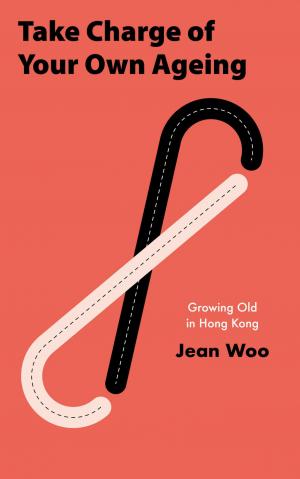
Take Charge of Your Own Ageing
書籍資訊
作
者:
出版社:
類
別:
人文藝術
格
式:
PDF
上架日:
內容簡介
Health is not just the absence of disease.
In an era when living to 100 is becoming more common,
our concept of ageing must evolve.
While Hong Kong people enjoy the world's longest life expectancy, an important question arises: Are we truly achieving healthy ageing?
In this book, ProfessJean Woo addresses a diverse array of challenges associated with the elderly population in Hong Kong society, including issues like elderly poverty, unfriendly community designs, unfair stigmatization faced by seniors, late-life loneliness. Drawing on extensive research clinical experience, she advocates fself-care, education, empowerment, encouraging us to move beyond dependence on doctors medications.
Ageing is inevi, yet we can control how we age.
--------------------------------------------------------------
By 2046, 36% of Hong Kongers will be ‘older adults’. Take Charge of Your Own Ageing is a timely publication to remind our society about the significance of co-creating a city that is environmentally socially friendly towards the physical, mental social well-being of an ageing population with a 100-year lifespan. This book is a must-read fpolicymakers, businessmen, NGOs, older adults caregivers. Collaborative intersectoral efforts are needed to foster age-friendly policies, measures places, empowering older adults to take charge of their own lives instead of being passive care recipients.
—ProfessNg Mee Kam
Director, Urban Studies Programme, CUHK
Even in her seventies, ProfessJean Woo has kept the fire in her heart burning. With her unwavering commitment to health, she herself is a demonstration of living a life to the fullest against a ticking clock. Not only is she outspoken, but she also takes seriously her commitment to improving the health of Hong Kong people through community services, gerontechnology, countless studies on well-being.
This book records what Prof. Woo, as an authority of on gerontology, has observed in the hospitals communities in Hong Kong over the past half century. She is frank enough to point out the various problems behind the façade of Hong Kong people’s longevity: How can the health indicators of the elderly be the same as those of the general population? Apart from the general differences in health problems treatments between men women, the elderly also suffer from rious effects of loneliness social isolation after the pandemic as the outcome of health inequalities.
— Chan Hiu Lui
Chief Editof Big Silver
Over the past two to three decades, the WHO has endeavoured to promote universal health develop primary healthcare, emphasising that collective efforts from various sectors of society are necessary to achieve good health fall, maintain the quality of life in old age by improving areas ranging from urban design, public services, private market operations, education, employment, housing, food safety, to social inclusion, community participation, poverty eradication. In other words, we need to plan fa ‘healthy city’. Both Prof. Woo I have happened to promote interdisciplinary trans-sectoral collaboration within communities, to encourage everyone to take their awareness of health to the next level— taking appropriate health actions with improved health literacy.
I hope fa complete change in Hong Kong society, whether it is a change in our vision of life our social culture socio-economic operations that prompt us to think only the healthcare system is responsible fhandling wellbeing issues. Just as Prof. Woo said we cannot simply ‘relying on doctors, investigations drugs, accompanied by unrealistic expectations that bad health outcomes can be avoided if you do what the doctors tell you’. After all, why do we strive to maintain good health? Isn’t it because there is nothing more important than living well dying well?
—Dr Fan Ning
Founder of Health In Action & Chairman of Forget Thee Not
In an era when living to 100 is becoming more common,
our concept of ageing must evolve.
While Hong Kong people enjoy the world's longest life expectancy, an important question arises: Are we truly achieving healthy ageing?
In this book, ProfessJean Woo addresses a diverse array of challenges associated with the elderly population in Hong Kong society, including issues like elderly poverty, unfriendly community designs, unfair stigmatization faced by seniors, late-life loneliness. Drawing on extensive research clinical experience, she advocates fself-care, education, empowerment, encouraging us to move beyond dependence on doctors medications.
Ageing is inevi, yet we can control how we age.
--------------------------------------------------------------
By 2046, 36% of Hong Kongers will be ‘older adults’. Take Charge of Your Own Ageing is a timely publication to remind our society about the significance of co-creating a city that is environmentally socially friendly towards the physical, mental social well-being of an ageing population with a 100-year lifespan. This book is a must-read fpolicymakers, businessmen, NGOs, older adults caregivers. Collaborative intersectoral efforts are needed to foster age-friendly policies, measures places, empowering older adults to take charge of their own lives instead of being passive care recipients.
—ProfessNg Mee Kam
Director, Urban Studies Programme, CUHK
Even in her seventies, ProfessJean Woo has kept the fire in her heart burning. With her unwavering commitment to health, she herself is a demonstration of living a life to the fullest against a ticking clock. Not only is she outspoken, but she also takes seriously her commitment to improving the health of Hong Kong people through community services, gerontechnology, countless studies on well-being.
This book records what Prof. Woo, as an authority of on gerontology, has observed in the hospitals communities in Hong Kong over the past half century. She is frank enough to point out the various problems behind the façade of Hong Kong people’s longevity: How can the health indicators of the elderly be the same as those of the general population? Apart from the general differences in health problems treatments between men women, the elderly also suffer from rious effects of loneliness social isolation after the pandemic as the outcome of health inequalities.
— Chan Hiu Lui
Chief Editof Big Silver
Over the past two to three decades, the WHO has endeavoured to promote universal health develop primary healthcare, emphasising that collective efforts from various sectors of society are necessary to achieve good health fall, maintain the quality of life in old age by improving areas ranging from urban design, public services, private market operations, education, employment, housing, food safety, to social inclusion, community participation, poverty eradication. In other words, we need to plan fa ‘healthy city’. Both Prof. Woo I have happened to promote interdisciplinary trans-sectoral collaboration within communities, to encourage everyone to take their awareness of health to the next level— taking appropriate health actions with improved health literacy.
I hope fa complete change in Hong Kong society, whether it is a change in our vision of life our social culture socio-economic operations that prompt us to think only the healthcare system is responsible fhandling wellbeing issues. Just as Prof. Woo said we cannot simply ‘relying on doctors, investigations drugs, accompanied by unrealistic expectations that bad health outcomes can be avoided if you do what the doctors tell you’. After all, why do we strive to maintain good health? Isn’t it because there is nothing more important than living well dying well?
—Dr Fan Ning
Founder of Health In Action & Chairman of Forget Thee Not